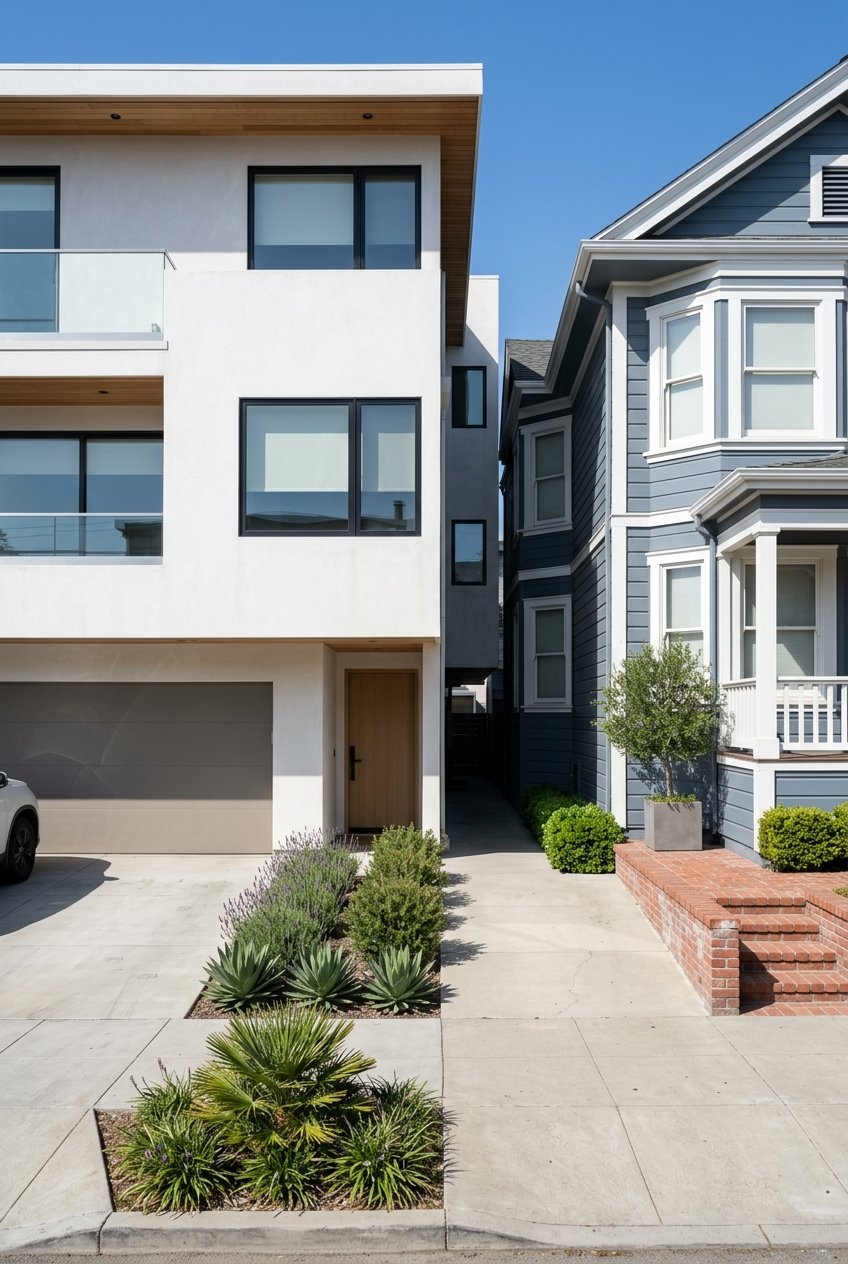
If you are deciding between a townhome and a single-family home in Hermosa Beach, the answer is not as simple as picking the lower-priced option. In this market, the better fit often comes down to how you want to live, how much control you want over your property, and how comfortable you are with shared rules and maintenance. Because Hermosa Beach is compact, built-out, and shaped by coastal zoning, the details matter here more than they do in many other beach communities. Let’s dive in.
Why this choice feels different in Hermosa Beach
Hermosa Beach is just 1.4 square miles, with nearly 20,000 residents and two miles of shoreline. It is one of the most densely developed cities in Los Angeles County, and that built-out character affects everything from parking to lot size to outdoor space.
That density also helps explain why townhomes and detached homes can feel very different in daily life. In a city where land is limited and beach traffic is real, ownership structure is not just a legal detail. It can shape your privacy, your upkeep, your parking options, and your future flexibility.
Price alone should not drive the decision
A lot of buyers assume a townhome is the budget-friendly alternative to a single-family home. In Hermosa Beach, that is not always true.
In Redfin’s March 2026 snapshot, the median sale price across all home types in Hermosa Beach was $1.8 million. Single-family homes had a median sale price of $2.1 million, while townhomes were reported at $2.5125 million. That means your decision should be based less on broad assumptions and more on the specific property, ownership structure, and lifestyle fit.
Understand the legal structure first
A townhome is not always a condo
One of the biggest sources of confusion is that a townhome’s look does not tell you how it is legally owned. In California, a Hermosa Beach townhome may be part of a condominium project or a planned development.
That distinction matters because it affects maintenance, insurance questions, common areas, and the rules you live under. A townhome may look like a standalone residence from the street, but still come with shared ownership features and association governance.
A detached home is not always HOA-free
Many buyers assume a detached house means complete independence. That is not always the case either.
California guidance makes clear that detached homes can also be part of a planned development with shared common areas or HOA-managed features. So if you want minimal oversight, you should confirm the title structure and governing documents instead of relying on the exterior design.
Townhome vs single-family: the real tradeoffs
Choose a single-family home for more control
If your priority is privacy, control of the lot, and more separation from neighbors, a detached home often has the edge. In practical terms, single-family homes usually offer more direct control over outdoor areas, remodeling decisions, and how you use the property day to day.
That can be especially valuable in Hermosa Beach, where lot ownership and usable exterior space carry extra weight. When land is scarce, having clearer control over your parcel can make a meaningful difference.
Choose a townhome for more convenience
If you prefer a simpler, more lock-and-leave lifestyle, a townhome may be the better fit. In many common-interest developments, the association is generally responsible for maintaining common areas, while you remain responsible for your separate interest.
That setup can reduce the amount of exterior upkeep on your plate. The tradeoff is that you may have less say over maintenance timing, design standards, repair decisions, and shared budgets.
Privacy and outdoor space often differ more than buyers expect
Detached homes usually offer more separation
Single-family homes often give you more distance from neighboring properties and more direct ownership of the land around you. If quiet, private outdoor space is high on your list, that can be a strong advantage.
In a dense coastal city, even a modest yard, patio, or setback can feel important. Detached homes tend to give you more confidence about what is yours and how you can use it.
Townhome outdoor space may be limited or shared in part
Townhomes can still offer attractive outdoor living, including patios, decks, balconies, or small yard areas. But in California common-interest developments, those spaces may be exclusive-use common area rather than fully private land.
That means you should ask exactly what you own, what you have the right to use, and who is responsible for maintaining it. In Hermosa Beach, where every square foot counts, that distinction is worth reviewing carefully before you write an offer.
Parking matters more here than in many markets
Parking is one of the most practical differences between property types in Hermosa Beach. Because the city attracts heavy beach activity, on-site parking can have an outsized impact on your daily routine.
The city states that residential parking permits are only available to residents in the impacted parking zone, are limited to three vehicles registered at the address, and are not guaranteed. Hermosa Beach also offers a driveway permit, but only for residents of single-family homes.
What to look for on a showing
When you tour a property, ask:
- How many on-site parking spaces are included
- Whether the property is in the impacted parking area
- Whether guest parking exists or is restricted
- Whether the parking setup actually works for your day-to-day vehicle needs
For some buyers, this one issue can quickly narrow the field.
HOA governance can be a benefit or a burden
For many townhomes, the association adds a second layer of decision-making to your ownership experience. That can be helpful if you value shared maintenance and a more structured environment. It can feel restrictive if you want maximum autonomy.
Associations typically enforce CC&Rs, collect fees and assessments, and manage common-area obligations. That means your monthly costs and long-term financial exposure are not limited to your mortgage, taxes, and insurance.
Review the HOA documents closely
California law requires sellers in common-interest developments to provide a detailed disclosure package. That can include governing documents, fee information, unresolved violation notices, reserve disclosures, and, if requested, the last 12 months of approved board minutes.
Those records can tell you a great deal about how the property is run. Before moving forward, it is smart to understand not just today’s dues, but also the association’s maintenance history, reserve funding, and any signs of future special costs.
Future flexibility often favors detached homes
If you are thinking beyond today’s layout, a single-family property may offer more options. Hermosa Beach says an ADU is a secondary residential unit on the same lot as a primary single-family or multifamily home, and owner-occupancy is required in single-family zones starting January 1, 2025.
That does not mean every detached home can support an ADU or major expansion. It does mean the lot itself may carry long-term value if you are considering multigenerational living, added versatility, or a future remodel, subject to city rules and other property-specific constraints.
Coastal permitting can also affect your plans
The city’s Local Coastal Plan says the coastal zone covers about 43% of Hermosa Beach and extends inland to Ardmore Avenue, with some exceptions. New development in the coastal zone may require a Coastal Development Permit.
If future renovation potential matters to you, that is another reason to look beyond the floor plan. A property’s location, lot, and permitting path can be just as important as its current finish level.
Where each property type tends to show up
Hermosa Beach zoning helps explain where different housing patterns appear. The city includes R-1 and R-1A single-family districts, as well as R-2, R-2B, R-3, and planned development districts that allow more attached or multifamily-style housing.
About 75% of the city is residentially zoned, and about 35% of that residential area is zoned R-2 or R-3. Minimum lot area per dwelling unit ranges from 4,000 square feet in R-1 to 1,750 in R-2 and R-2B, and 1,320 in R-3.
In general, townhome-like housing is more likely in denser coastal, downtown, and mixed-use areas, while detached homes are more often found in R-1 and R-1A areas. Still, each parcel is unique, so this should be viewed as a pattern rather than a rule.
A simple decision framework: control vs convenience
If you feel torn, this comparison can help clarify your priorities.
| If you value... | You may lean toward... |
|---|---|
| More privacy and separation | Single-family home |
| More direct control of land and outdoor space | Single-family home |
| Lower exterior maintenance burden | Townhome |
| A lock-and-leave lifestyle | Townhome |
| Fewer shared rules and approvals | Single-family home |
| Comfort with HOA governance in exchange for convenience | Townhome |
| Future ADU or remodel potential | Single-family home |
| Simpler day-to-day upkeep | Townhome |
In Hermosa Beach, the smartest question is usually not which property type is better in the abstract. It is which ownership model fits your cars, your routines, your tolerance for HOA governance, and your long-term plans.
Questions to ask before you buy
Before you commit to either option, make sure you have clear answers to a few practical questions:
- Is the property legally a condo, a planned development, or a standard single-family parcel?
- What exactly is private, exclusive-use, or common area?
- Who handles exterior maintenance and repairs?
- How many parking spaces are truly usable?
- Are there HOA dues, reserve issues, or possible future assessments?
- If flexibility matters, what might the lot support over time?
- Is the property in the coastal zone, and could that affect future work?
Those questions can help you compare homes more accurately and avoid surprises after closing.
The right Hermosa Beach purchase is rarely about choosing the trendier format. It is about matching the property’s ownership structure, daily function, and long-term potential to the way you actually want to live. If you want a clear read on which option aligns best with your goals in Hermosa Beach, schedule a private consultation with Gary E. Richardson.
FAQs
What is the main difference between a Hermosa Beach townhome and single-family home?
- The main difference is often control versus convenience. A single-family home typically offers more privacy, land control, and future flexibility, while a townhome often offers shared-maintenance convenience with HOA governance.
Are Hermosa Beach townhomes always less expensive than single-family homes?
- No. In Redfin’s March 2026 snapshot, the median sale price for townhomes in Hermosa Beach was higher than the median sale price for single-family homes.
Do Hermosa Beach townhomes always have an HOA?
- Many do, but the key issue is the legal structure. A townhome may be part of a condominium project or a planned development, and those structures usually involve an association with fees, rules, and maintenance responsibilities.
Can a detached Hermosa Beach home still have an HOA?
- Yes. In California, a detached home can still be part of a planned development with common areas or HOA-managed features, so you should confirm the title structure before assuming it is HOA-free.
Why is parking such a big factor for Hermosa Beach buyers?
- Parking matters because Hermosa Beach is dense and draws heavy beach traffic. Residential permits are limited, not guaranteed, and driveway permits are only available to residents of single-family homes.
What should buyers review in a Hermosa Beach HOA document package?
- Buyers should review the governing documents, assessment and fee information, reserve disclosures, unresolved violation notices, and recent approved board minutes to understand maintenance responsibilities, financial health, and possible future costs.
Does a single-family home offer more future flexibility in Hermosa Beach?
- Often, yes. A detached home may provide more options for remodeling or ADU planning, although feasibility depends on the lot, zoning, city rules, and whether coastal permitting applies.
Does the coastal zone affect Hermosa Beach property decisions?
- Yes. The coastal zone covers about 43% of the city, and new development in that area may require a Coastal Development Permit, which can affect future renovation or expansion plans.
