If you are selling a Hermosa Beach townhome, presentation is not a side detail. In a market where homes can move quickly and buyers often compare several premium options at once, the way your property looks, feels, and reads online can shape both urgency and price. With the right preparation, you can highlight your townhome’s strongest features, reduce friction during escrow, and launch with more confidence. Let’s dive in.
Why preparation matters in Hermosa Beach
Hermosa Beach remains a high-value, competitive coastal market. Redfin’s May 2026 data shows a median sale price of $2,411,057, median days on market of 31, and a very competitive environment where many homes receive multiple offers and average sales come in around 1% above list price.
Realtor.com’s May 2026 summary also points to a seller’s market, with a median listing price of $2.499 million and 65 active listings. The numbers differ by platform, but the takeaway is consistent: buyers are active, pricing is premium, and polished homes tend to stand out fast.
For you as a seller, that means preparation is not about over-improving. It is about making your townhome feel clean, current, easy to understand, and ready for a serious buyer to act on.
Focus on the highest-impact updates
Not every pre-sale project adds equal value. For a near-market-ready Hermosa Beach townhome, the most effective improvements are often the simplest ones.
According to 2025 staging research from NAR, 83% of buyers’ agents said staging made it easier for buyers to visualize a property as their future home. The same research found that staging can affect performance directly, with 29% of agents reporting a 1% to 10% increase in dollar value offered and 49% saying it reduced time on market.
That does not mean you need a full renovation. It means you should prioritize updates that help buyers see light, scale, function, and finish.
Start with light, space, and flow
Townhomes often live and die by how open and bright they feel. Before you spend heavily, look at anything that blocks natural light, interrupts sightlines, or makes rooms feel smaller than they are.
NAR highlights several low-friction updates that matter: letting natural light show, using neutral wall colors, opening the space where appropriate, streamlining decor, and replacing worn carpet with wood, vinyl, or tile where it makes sense. These are practical changes that photograph well and help a buyer focus on the home itself.
Fix obvious wear before launch
Premium buyers notice deferred maintenance quickly. Scuffed walls, loose hardware, stained grout, worn carpet, chipped paint, or dated light fixtures can make a home feel less turnkey, even if the floor plan and location are strong.
If your budget is limited, decluttering and correcting obvious property faults are still commonly recommended by sellers’ agents. In a premium segment, small flaws can invite larger doubts, so clean execution matters.
Stage the rooms buyers care about most
When buyers scroll listings or walk through a home, some spaces carry more weight than others. Your preparation plan should reflect that.
NAR’s 2025 research found the living room was the most important room to stage, followed by the primary bedroom and kitchen. If your budget does not allow full-property staging, start there.
Living room
Your living room should feel calm, open, and easy to picture for daily use and entertaining. Keep furniture scaled to the room, remove anything bulky, and create a layout that makes circulation obvious.
For many Hermosa Beach townhomes, this room also helps sell ceiling height, natural light, balcony access, or view lines. Those features should be visible, not hidden by oversized furniture or too many accessories.
Primary bedroom
The primary bedroom should read as restful and generous. Keep the palette neutral, simplify bedside styling, and remove extra chairs, storage pieces, or workout gear that crowd the room.
Buyers are often looking for emotional ease here. A room that feels quiet and uncluttered helps them imagine comfort, privacy, and a polished everyday routine.
Kitchen
In a townhome, the kitchen often anchors the main living level. Clear counters, minimize small appliances, and highlight surfaces, storage, and any connection to dining or outdoor space.
If cabinet hardware, lighting, or paint feels tired, modest updates can sharpen the entire impression. The goal is not to make the kitchen look trendy. The goal is to make it look cared for and current.
Treat terraces and outdoor space like real rooms
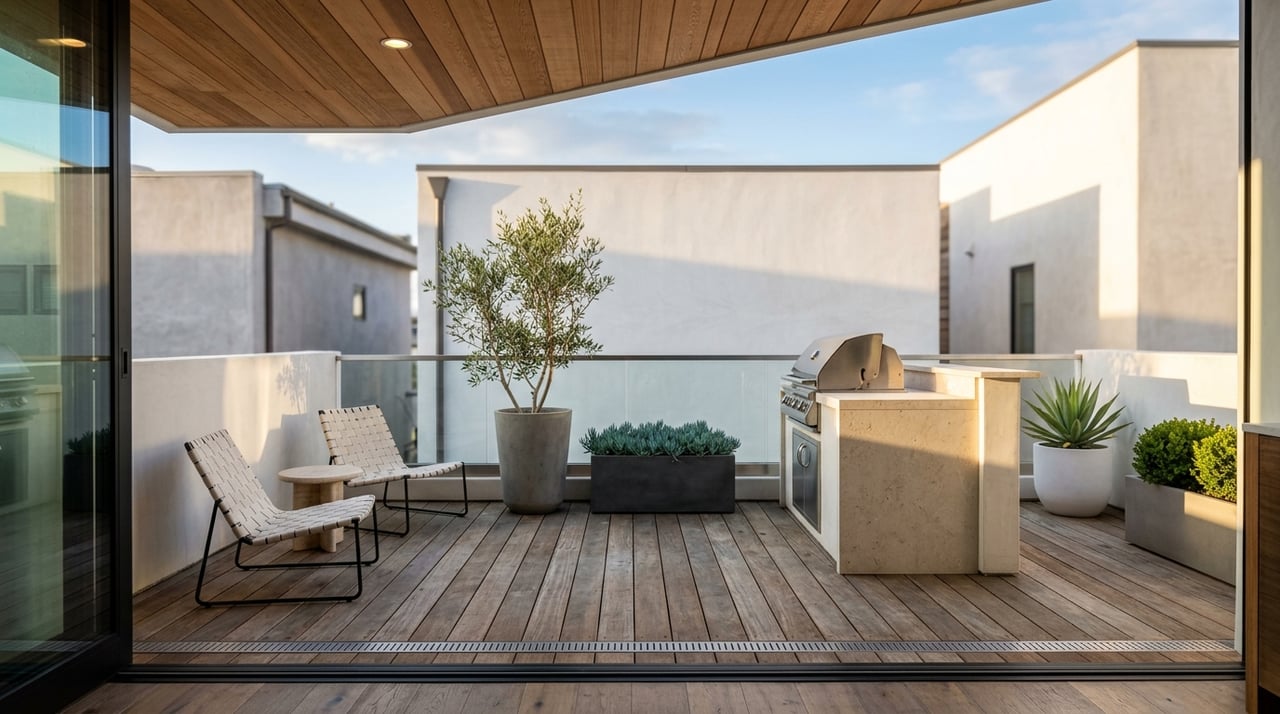
Outdoor space can be a major selling point in Hermosa Beach, even when it is compact. A terrace, balcony, rooftop deck, or small patio should never feel like leftover square footage.
NAR’s outdoor staging guidance recommends presenting exterior areas as usable lifestyle zones. That means creating distinct spaces for lounging, dining, or socializing, using lighting to define the area, and choosing furniture scaled to the size of the terrace or yard.
Create a simple lifestyle story
A few thoughtful pieces usually work better than filling every corner. A small seating group, a dining vignette, or soft outdoor lighting can help buyers understand how the space lives.
This matters in coastal townhomes because buyers often place a premium on indoor-outdoor flow. When outdoor space feels intentional, the whole property can feel more complete.
Know when cosmetic work becomes a permit question
Many sellers ask whether they should do more than paint, flooring, and staging before listing. In Hermosa Beach, that question deserves extra care.
The city notes that its coastal zone covers about 43% of Hermosa Beach and includes residential uses. New development, or work that increases floor area or height by more than 10% or affects coastal resources, may require a Coastal Development Permit after city concept approval.
For most pre-sale preparation, cosmetic work is the cleaner path. If you are considering a bigger project before listing, you should allow time to confirm whether city review, permits, or coastal approvals apply.
Plan around local building timing
Hermosa Beach’s Building and Safety Division performs plan check and field inspections for additions and alterations before permits are issued. The city also limits construction hours to Monday through Friday from 8:00 a.m. to 6:00 p.m. and Saturday from 9:00 a.m. to 5:00 p.m., with no Sunday or holiday work.
The city has adopted the 2025 California Building Standards Codes effective January 1, 2026. If you choose to complete improvement work before listing, build in time for permits, inspections, and permit records to be available for the next buyer’s review.
Get ahead of disclosures and inspections
A premium sale is not only about beautiful marketing. It is also about reducing surprises.
California’s Real Estate Transfer Disclosure Statement is required for residential property of one to four dwelling units. The California Department of Real Estate states it should be delivered as soon as practicable and before transfer of title, and it is not a warranty or a substitute for inspections.
Use reports to support clean disclosure
The same DRE guidance notes that sellers and agents may use expert reports to support required disclosures. That is one reason pre-listing inspections can be useful for a townhome sale, especially when they help identify issues early and give you time to decide whether to repair, disclose, or price accordingly.
A structural pest control inspection is not required by law before transfer. Still, if a contract or lender requires one, the report must be delivered before title transfers. In a premium listing, getting ahead of that possibility can help you launch with more clarity.
Understand hazard disclosures
The DRE guide also explains that the Natural Hazard Disclosure Statement is part of the seller package for mapped hazard areas. If a reasonable person cannot tell whether a property is in a zone, the seller generally must mark yes unless an expert report shows otherwise.
For you, the practical takeaway is simple: gather your disclosure information early. Waiting until you are already in escrow can create stress, delay, and avoidable renegotiation.
Organize the HOA package early
If your townhome is part of a common interest development, the HOA documentation is not a minor back-office item. It is part of the buyer’s due diligence and part of the property’s overall presentation.
California law requires sellers to provide governing documents, operating rules, association articles, financial documents, the operating budget, the most recent reserve study, the assessment and reserve funding disclosure summary, current assessments and fees, unpaid assessments, unresolved violation notices, defect materials, and approved assessment changes that are not yet due. Buyers can also request board minutes from the previous 12 months.
Why this matters for a premium sale
Well-prepared HOA documentation helps buyers understand the property more quickly. It can also reduce uncertainty around monthly costs, reserves, rules, and any unresolved issues that may affect value or financing.
For a premium Hermosa Beach townhome, this paperwork supports the larger story you are telling: the home is not only attractive, it is also well-managed, transparent, and ready for a smooth transaction.
Build a pre-sale checklist
A focused plan can keep your preparation efficient. Before you go live, work through the basics in order.
Essential pre-listing steps
- Declutter and simplify every room
- Maximize natural light
- Paint in neutral tones where needed
- Replace or repair worn flooring where appropriate
- Correct obvious maintenance issues
- Stage the living room, primary bedroom, and kitchen first
- Style terraces, balconies, or decks as functional spaces
- Decide carefully before taking on permit-driven improvements
- Gather disclosure documents early
- Order HOA documents as soon as possible
- Consider pre-list inspections if they will reduce surprises
- Confirm any completed work has proper records if permits were required
Premium marketing works best after smart preparation
In Hermosa Beach, strong pricing and buyer demand create opportunity, but they do not replace strategy. A townhome that is thoughtfully prepared, visually polished, and administratively organized is easier for buyers to trust and easier for the market to reward.
That is where a high-touch approach can make a real difference. When preparation, staging, photography, and launch timing work together, your home has a better chance to command attention from the start and support a premium result.
If you are thinking about selling, Gary E. Richardson can help you prepare your Hermosa Beach townhome with the kind of editorial presentation, local market judgment, and personalized guidance that today’s coastal sellers value.
FAQs
What matters most when preparing a Hermosa Beach townhome for sale?
- The biggest priorities are light, cleanliness, neutral presentation, corrected wear, and strong staging in the living room, primary bedroom, and kitchen.
Should you stage a Hermosa Beach townhome before listing it?
- Yes, staging can help buyers picture the home more easily, and NAR’s 2025 research found that it may improve offer value and reduce time on market.
Do outdoor spaces matter when selling a Hermosa Beach townhome?
- Yes, terraces, balconies, and patios should be presented as usable living areas with clear zones for relaxing, dining, or entertaining.
Do pre-sale improvements in Hermosa Beach ever require permits?
- Yes, larger projects may involve city permits, inspections, and in some cases coastal review, so cosmetic work is usually simpler when you are preparing to list.
What HOA documents do sellers need for a Hermosa Beach townhome sale?
- California law requires a broad set of HOA materials, including governing documents, financials, reserve information, current fees, unresolved violations, and certain assessment disclosures.
Should you get inspections before listing a Hermosa Beach townhome?
- Pre-list inspections are not always required, but they can help surface issues early, support disclosure, and reduce surprises once you are in escrow.
